
BIM Coordination: The Secret to Seamless Construction Workflows
January 10, 2025
Written by BIM Outsourcing
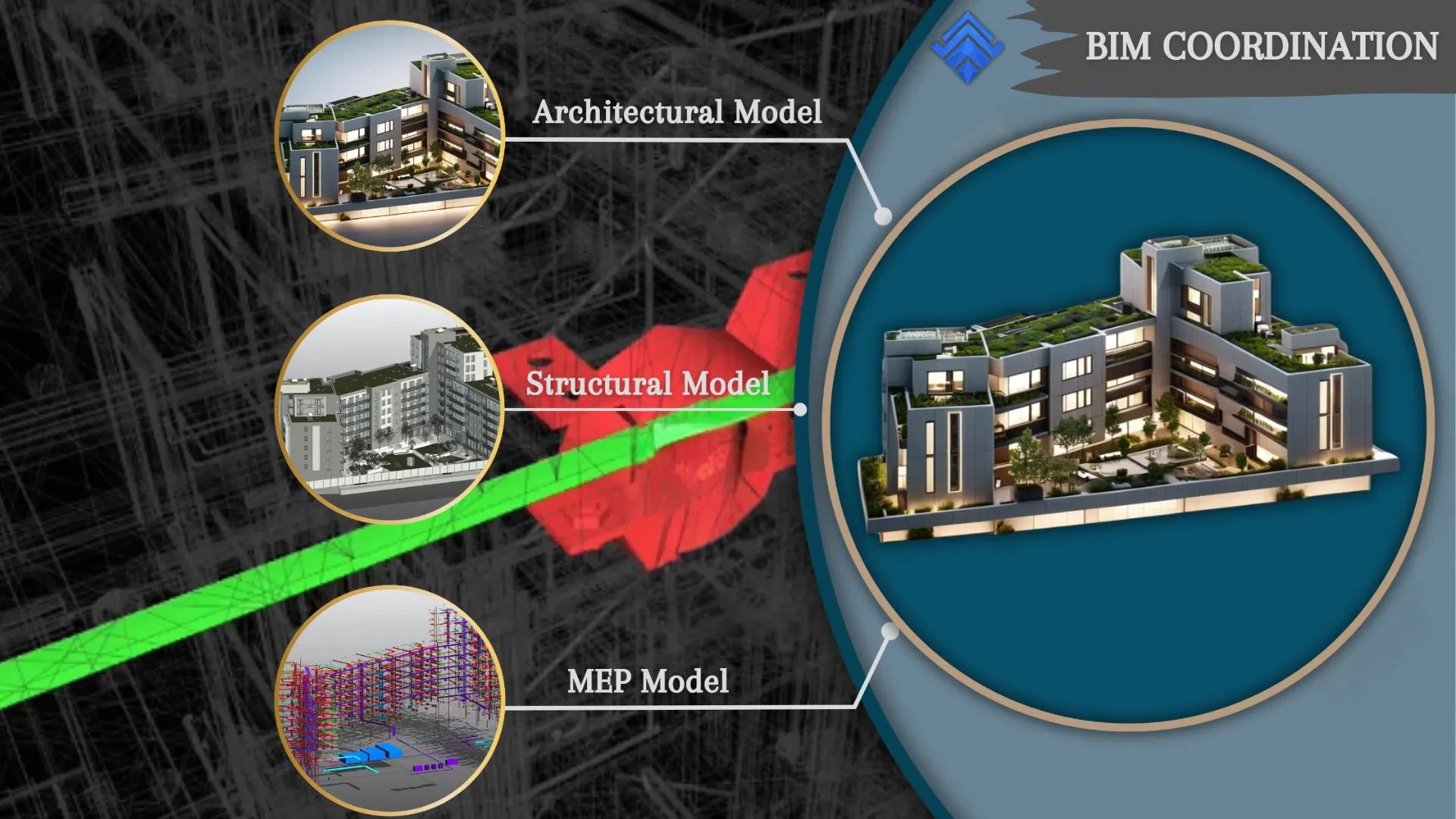
Building Information Modelling (BIM) has revolutionised the way construction projects are designed, planned, and executed. It is fair to assert that that BIM coordination is an essential feature, and understanding BIM Coordination best practices ensures a smooth workflow, avoids mistakes, and saves resources and time among teams working on a project, such as architects, engineers, and builders. The central idea of this blog is to understand the essence of BIM coordination, its benefits and the tools required, while adopting it for seamless construction workflows.
Table of Contents
- Understanding the concept of BIM Coordination
- Steps in BIM Coordination
- Widely used tools for BIM Coordination
- Key outcomes of BIM Coordination
- Conclusion
Understanding the concept of BIM Coordination
The integration and management of multiple models into a single federated model, created by different disciplines such as architects, structural engineers, MEP (Mechanical, Electrical, and Plumbing) engineers, is known as BIM coordination. The sole motive is to resolve clashes and conflicts ahead of construction execution to enhance smooth workflow and collaboration among the stakeholders.
BIM coordination in the UK functions under the guidance of BS EN ISO 19650, an internationally recognized standard that provides guidelines for effective information management throughout the asset lifecycle.
Steps in BIM Coordination
- 3D Model Creation
Different discipline teams create detailed 3D models of their respective disciplines according to a predefined BIM Execution Plan (BEP), ensuring a smooth workflow and compliance with standards.
- Federation
The next step after 3D model creation is the federation (the process of unifying into a single entity) of each discipline’s model. It provides a better overview for improved decision-making.
- Clash Detection
Federation enables us to spot potential clashes and conflicts between different elements. Performing automated clash detection using tools like Navisworks which speeds up the coordination process and ensures accuracy.
- Clash Resolution
After spotting potential clashes, addressing those clashes is an essential step in the BIM coordination process, which prevents project delays and costly rework.
- Continuous Updates
The next step is updating the federated model according to the most up-to-date information after resolving the clashes. It also ensures that the model is aligned with different stages of on-site construction, reducing the chance of errors and miscommunication.
Widely used tools for BIM Coordination
For improved collaboration, accurate clash detection, and precise data management, BIM coordination depends on advanced software tools. Some of them are listed below:
- Autodesk BIM 360
BIM 360 provides a Common Data Environment (CDE) platform to interdisciplinary teams for sharing and managing project-related data, ensuring that everyone has access to up-to-date information instead of relying on outdated data. It fosters communication and improves collaboration.
After the integration of different models into a federated model, Navisworks is a tool widely used for identifying conflicts visually and resolving them in an efficient way, ensuring accurate clash detection to prevent costly delays on-site.
- Autodesk Revit
Revit enables interdisciplinary teams to create a detailed 3D model of their respective disciplines, making it easier to manage parametric data efficiently. It allows seamless integration of different discipline models into a single federated model.
Key outcomes of BIM Coordination
- Clash Detection and Resolution
In Building Information Modelling (BIM) coordination, the term clash detection refers to identifying problems, and resolution refers to addressing them. It is an important aspect of BIM coordination, as it allows for the detection and resolution of conflicts that may arise during the construction process. Clashes are usually categorized as:
- Hard Clashes
Hard clashes refer to the intersection of two elements within a building. For example, a pipe intersecting a beam is considered a hard clash, as they physically overlap. It is crucial to address these types of clashes before construction begins on-site because they will lead to significant time delays. - Soft Clashes
Soft clashes are usually spatial issues rather than physical collision-related issues. For example, a lack of space around machinery or equipment can make maintenance or daily routine use difficult. Addressing these clashes is important to ensure sufficient space and proper functioning of systems. - Workflow Clashes
The conflicts that arise during the execution phase related to scheduling and sequencing, where different activities overlap and create a clash, are known as workflow clashes. For example, the installation of electrical conduits in the ceiling area by the electrical wiring team and the plumbing team, which needs access to the same space at the same time for duct installation, creates a workflow clash. Ignoring these clashes can lead to project delays and increased labour costs.
By addressing these clashes early with the help of clash detection software like Navisworks, you can optimize the overall project, saving time and money.
- Hard Clashes
- Improved Collaboration
BIM coordination improves collaboration by providing access to up-to-date information for all stakeholders working on a project within a Common Data Environment (CDE). Having access to the latest information about the project reduces errors and conflicts, and improves communication and collaboration, which are crucial for an efficient project delivery.
- Cost and Time Optimization
With the help of BIM Coordination best practices, we can resolve potential conflicts during the design phase, which reduces errors and costly delays, saves both time and money, and ensures the smooth execution of the project without any interruptions.
- Compliance with BIM Level 2
In the UK, compliance with BIM Level 2 is mandatory for all projects. This means that the federation of different disciplines through BIM coordination must align with certain rules to ensure that the project meets industry standards. In essence, BIM Level 2 ensures a smooth workflow, reduces delays, reduces costs, and improves communication between interdisciplinary teams in accordance with legal guidelines.
- Enhanced Sustainability
BIM coordination plays a vital role in designing and analysing energy consumption to foster early sustainable practices. By doing so, the waste material ratio is significantly reduced, which is crucial for achieving the UK’s Net Zero 2050 goals. It ensures the minimisation of carbon emissions and the wise allocation of materials to save energy and reduce environmental impact, promoting a more sustainable future.
Conclusion
Ensuring a smooth construction workflow is vital, as it enables teams to identify and address problems early in the design phase. This proactive approach enhances project quality and ensures that the projects are completed on time without any interruptions and within budget.
BIM Outsourcing is a leading bim coordination service provider in the UK. Our chartered bim engineers minimize clashes and deliver clash-free model integration from the very start of your project.