
What are Construction Drawings in the UK? A Guide for Contractors & Consultants
September 26, 2025
Written by BIM Outsourcing
Introduction Construction Drawings in the UK
The primary reason and the sole truth behind the success of any infrastructure project is construction drawings — also known as technical drawings or blueprints. So, within the UK construction industry, whether you are a contractor, consultant, project manager, or architect, it doesn’t change the fact that having an understanding of CAD drawings, architectural plans, structural drawings, MEP drawings, their purpose, and function is of utmost importance.
In this blog, we will quickly go through construction drawings and building documentation: their essence, types, and the role that drawing accuracy plays in ensuring project deliverables are submitted on schedule and remain cost-effective throughout.
What are Construction Drawings?
A comprehensive set of drawings, drafted to a particular scale and representing every technical and design aspect of a construction project, is known as construction drawings. The core purpose of these drawings is to bridge the communication gap among field experts, consultants, contractors, and regulatory authorities by means of visuals demonstrating how a structure should be executed on-site.
Below are the checkmarks we have after these drawings’ completion:
- Design intent and clarity from inception to the end
- Planning approvals and permissions from regulatory bodies.
- Precise project quantity take-offs and cost estimates.
- Streamlined construction workflow and coordination
- Compliance and on-site execution.
The construction drawings are typically drafted during the design phase of a project and are updated whenever necessary.
Types of Construction Drawings
Having knowledge of the different types of construction drawings is essential for getting a project executed the right way on-site. Below are the most commonly known types in the UK construction industry:
General Arrangement (GA) Drawings
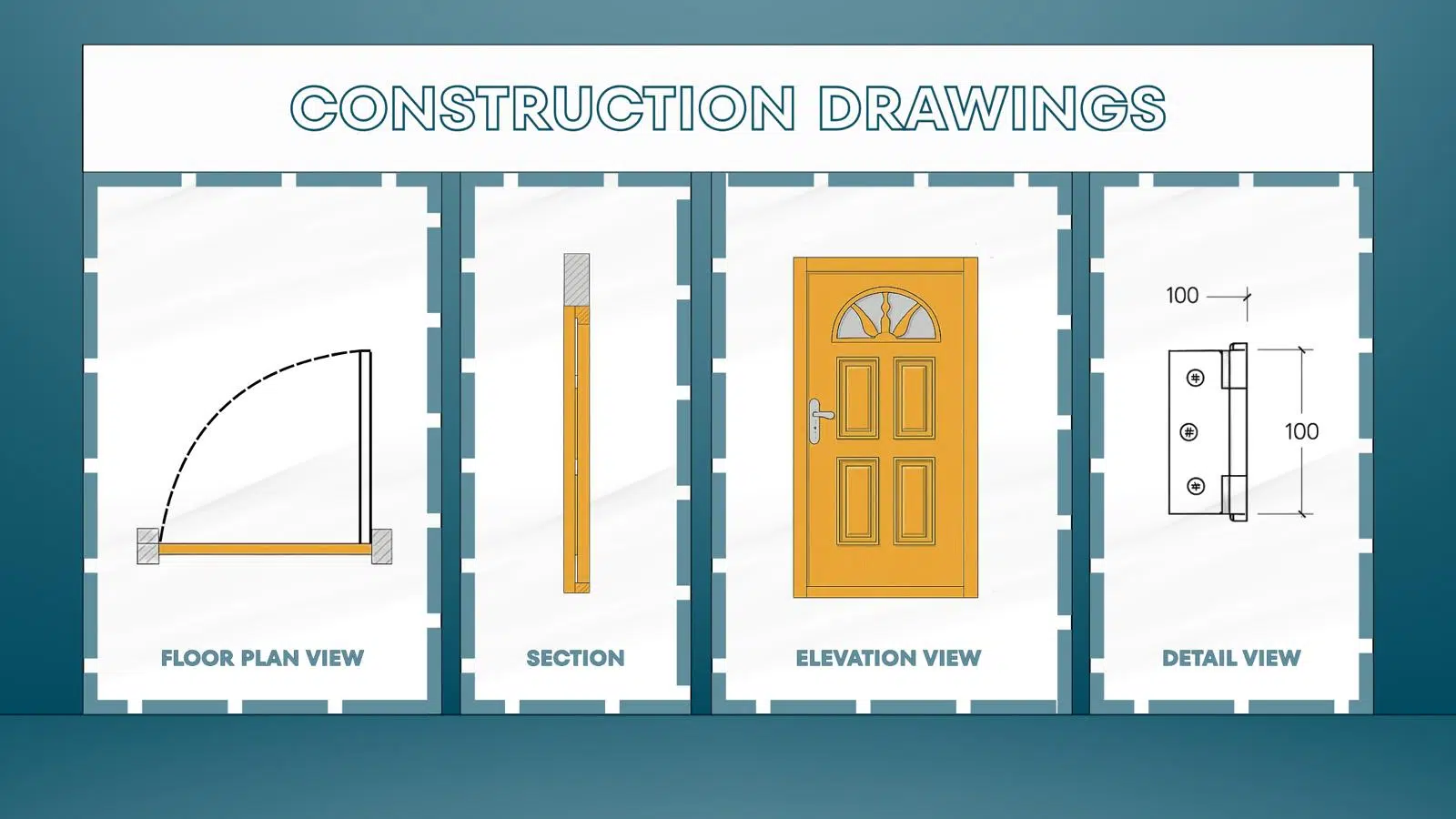
Drawings that show building or system layouts from a top view are known as General Arrangement Drawings. They include:
- Site Layout plans
- Floor Plans
- Roof Plans
- The core purpose of these drawings is to help understand how spaces are organised, how people move back and forth, and how interdisciplinary systems fit and function together seamlessly.
Elevation Drawings
Drawings that show the vertical faces or external appearance of a building or structure are known as Elevation Drawings. They include:
- Front, back, and side views
- Openings, heights, and levels
- Materials and finishes
- These drawings help stakeholders visualise how the building will look from different views.
Section Drawings
Drawings that show the internal details of a building or component, which are essential yet not visible from the exterior, by means of a cut-through, are known as Section Drawings. They include:
- Floor-to-floor heights
- Internal staircases and shafts
- Ceiling and roof structures
- Wall compositions and partitions
Detail Drawings
As the term indicates, it is something related to details. Drawings that show a detailed view of a specific component or element are known as Detail Drawings. They include:
- Doors and windows
- Structural connections
- Insulation and waterproofing details
- Façade and cladding
Why Accuracy Matters in Construction Drawings?
In construction drawings, accuracy is important because it helps us understand how the project will be executed, how much it will cost, whether it will be safe, and whether it will comply with the project requirements.
Incomplete and inaccurate drawings can lead to:
- Potential on-site delays
- Costly rework and material wastage
- Miscommunication among interdisciplinary teams
- Compliance or approval issues
- Legal claims or disputes
Complete and accurate drawings help ensure:
- Fewer on-site concerns and RFIs (Requests for Information)
- Optimised material procurement and construction workflows
- Seamless interdisciplinary (architecture, structural, and MEP) coordination
- Easier facility management operations post-construction.
Types of Construction Documents in the UK
In the UK, construction documents typically follow RIBA (Royal Institute of British Architects) project stages and include:
Concept Drawings
Early drawings showcasing a concept or idea to engage with the client.
Planning Drawings
Drawings submitted to obtain planning permission and approvals.
Technical Design Drawings
These drawings are used for tendering and construction purposes.
As-Built Drawings
Drawings representing the final appearance of what was built on-site.
Record Drawings
Record drawings are used in post-construction operations, such as facility management.
Conclusion
At the base of any project’s success, construction drawings are vital and cannot be overlooked. Consultants and contractors can better manage the project and enhance their project outcomes by gaining insights into what construction drawings are, their types, and why accuracy and precision matter in them. From site layouts to detailed drawings, and from concept drawings to as-built drawings, each one serves a crucial purpose.
Seeking accurate and reliable construction drawings that save your time and money? Have a look at our construction drawing services.