
Using AI to Revolutionize Safety in Construction
December 6, 2025
Written by BIM Outsourcing
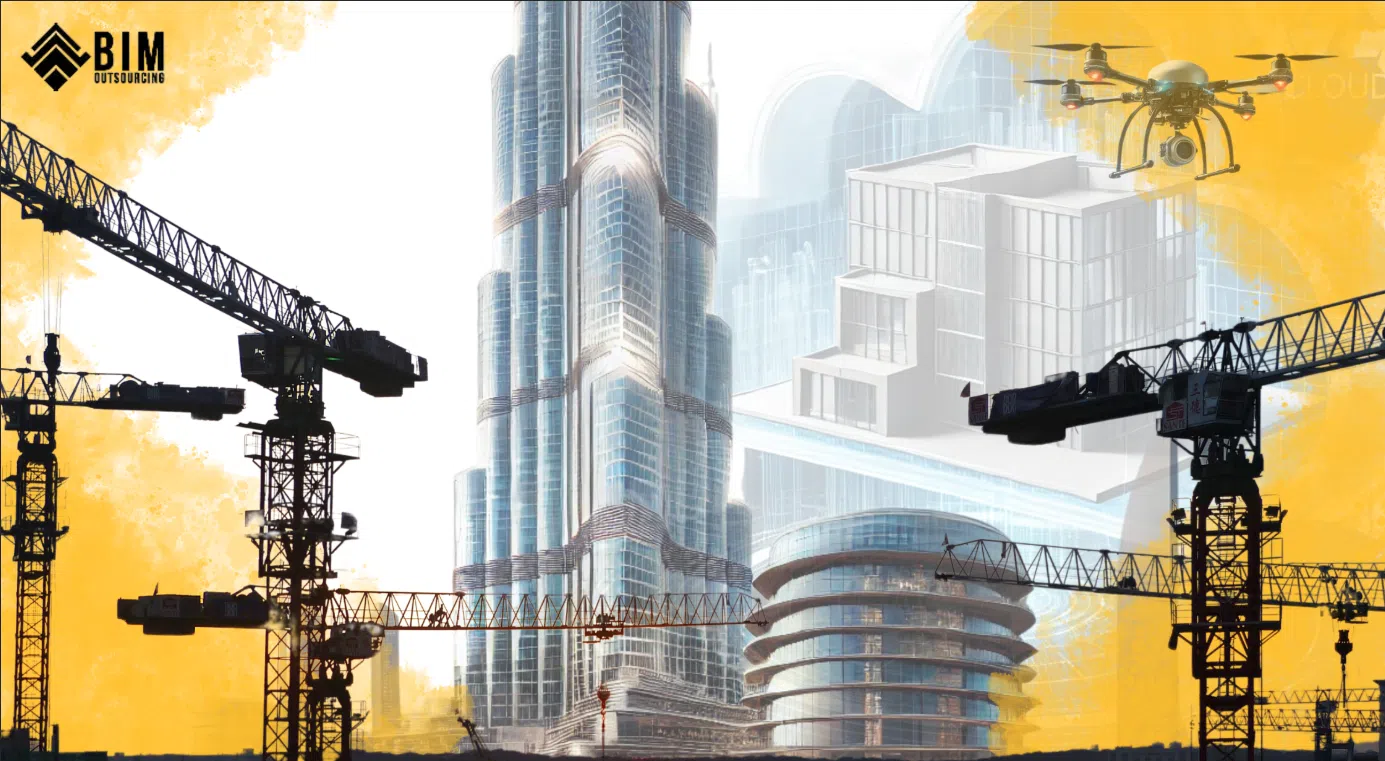
The construction industry is quite notorious for its dynamic and often hazardous work environments, has always ensuring challenges in providing 100 percent worker safety. Despite implementation of updated and insightful regulations and safety standards, the construction sectors continue to report significant numbers of construction site fatalities and injuries each year. Artificial intelligence is proving to be a powerful tool in transforming construction safety practices, offering promising and efficient solutions as compared to traditional solutions.
Once Artificial intelligence is integrated with safety protocols, the construction industry will shift from reactive safety measures to proactive and predictive systems. This shift not only promises enhanced worker safety but also to improve productivity and efficiency across project sites.
The Persistent Safety Challenges in Construction
Construction remains one of the most dangerous industries worldwide, having the long list of risks ranging from falls and equipment accidents to environmental hazards such as extreme weather and faulty structure. There are still a number of persisting challenges despite the safety training, inspections and permit documents. Reasons of construction fatalities often includes:
- Human Error
Every worker on site is prone to mistakes due to human instinct. The ratio of human related accidents grows especially under fatigue or stress. - Uncertainty on construction sites
Every day is a new day on the construction sites, everyday circumstances change, creating new hazards that traditional methods struggle to address. - Manual Safety Monitoring
Fully relying on human observation for safety enforcement can lead to inconsistencies and negligence.
Although manual safety measures are still essential, they are reactive in nature instead of proactive. This is where artificial intelligence plays its role, offering innovative tools to anticipate risks before they turn into accidents, mitigating hazards and fostering a culture of safety on construction facilities.
How AI can Enhance Construction Safety?
AI has a distinguished ability to process and simulate vast amounts of data in real-time and provide actionable insights making it more valuable for safety management. Below are some of the keyway's AI can be utilized to revolutionize safety on construction sites:
- Real-time Monitoring and Hazard Detection
AI-powered systems powered with computer vision can analyze video feeds from cameras fitted on construction sites to detect safety violations. For example, these systems can identify workers without personal protection equipment's (PPEs) and detect unsafe operations of the equipment.
Additionally, AI can integrate with drones equipped with cameras to monitor large and complex sites. They can easily and quickly survey the inaccessible or dangerous places, identify structural weaknesses, unstable ground, or potential hazards. Surveillance cameras on site can identify potential hazards, such as any object or people in dangerous areas and activate the emergency team to secure them.
- Automated Routine Inspections
Routine safety inspections on construction are although critical and progressive, but they are time-consuming and labor intensive. AI enabled robots and automated systems can efficiently perform these routine inspections, they can capture precise data related site condition, equipment functionality and compliance with safety standards.
AI enabled robotic inspection has the advantage that no detail is overlooked and allows EHS (environment, health and safety) professionals to focus on results from the insights and make progressive decisions rather than conducting routine checks.
As artificial intelligence continues to evolve, its application in construction safety will become more sophisticated and accessible. Construction safety future will involve AI powered robots managing and surveying the site with minimal human intervention, specifically for dangerous tasks and sites. - Predictive Analysis to Prevent Risk
AI is transforming the way enterprise EHS teams' approach to make safety decisions with the access to predictive insights and intuitive reports. If historical data, weather forecast and real-time sensor data is inserted beforehand, then AI systems can predict risks before they get materialized.
Construction machinery malfunction and preventive maintenance can be predicted in advance and required activities can be executed. - Transforming Training with AI and VR
Health and safety training are as crucial as EHS inspections to ensure a healthy work environment on construction sites. Virtual reality simulation enables workers to do the training in an environment that is just like real emergencies in which they can practice their response to emergencies. There is no real-world risk involved in training with AI enabled VR setup, all they do is to perform training on different scenarios like equipment malfunctioning, structural collapse, fire or flooding.
These simulation and AI learning systems can adapt to individual speeds and styles, ensuring comprehensive understanding and preparation for diverse team members.
- Enhancing Well Being of the Site Team
PPE wearables like helmets and vests are mandatory for construction workers or anybody present on the site. These wearables can be integrated with the AI to monitor worker’s health to track heart rate, body temperature, and fatigue levels, alerting supervisors and EHS professionals to take necessary actions.
For instance, AI can detect the signs of overheating or fatigue with the help of monitoring sensors on wearable and recommend compulsory breaks ensuring safety and health while maintaining productivity. Some wearables like smart watches and helmets can detect fall or sudden collision which has the ability to alert emergency services.
Conclusion
Although AI is still under development, every week a new tool is released which makes the daily workflow smarter, easier and efficient in every industry. Professionals are developing AI tools and software that can assist in the development of risk assessment method statement, training modules, smart surveillance systems and wearable. Efficient surveillance systems detecting safety violations and enforcing immediate corrective action can reduce the incident rate by 40%. As artificial intelligence continues to evolve, integrating it with the construction industry will not only save lives but also ensure safer accommodation and facilities.
This integration currently struggles with skill gaps and requires updated hardware to implement AI. As construction enters the digital age, prioritizing AI for safety is no longer an optional aspect but imperative for secure construction.