
Should you outsource BIM modelling or build in-house? A Decision Guide for UK Firms
August 2, 2023
Written by BIM Outsourcing
Should you outsource your BIM modelling, or build a team in-house? For most UK construction, MEP and engineering firms it is one of the bigger operational decisions you will make, and there is no single right answer. The best choice depends on your project pipeline, your budget, the in-house skills you already have, and how much control you want to keep. This guide walks through both sides honestly so you can make the call that fits your firm.
The real question: outsource BIM or build in-house?
It is tempting to frame this purely as a cost decision, but it rarely is. Building an in-house BIM team means hiring Revit technicians, BIM coordinators and often a BIM manager, then paying for software licences, training, hardware and ongoing overhead, whether or not you have a full pipeline of work. Outsourcing converts most of that fixed cost into a variable, per-project cost and gives you access to specialists on demand. The trade-off is control, proximity and the institutional knowledge that stays in the building when you employ people directly.
Below we set out when each model makes sense, an honest list of pros and cons for both, what the numbers tend to look like in the UK, and how a hybrid approach often gives firms the best of both.
When building an in-house BIM team makes sense
An in-house team tends to win when BIM is core to your business and your workload is steady and predictable. If you have a consistent stream of projects that keeps modellers busy 12 months a year, the per-hour economics of employed staff can beat outsourcing. In-house people sit in your meetings, absorb your standards and templates, and build deep familiarity with how your firm works, which pays off on complex, long-running schemes where continuity matters.
You also keep tighter control over data security, intellectual property and day-to-day priorities. For firms with sensitive client information, or those who want BIM capability to become a long-term competitive asset, owning the team outright is a defensible choice.
When outsourcing BIM makes sense
Outsourcing tends to win when your workload is variable, when you need to scale quickly, or when you need expertise you do not yet have in-house. A specialist MEP BIM modelling and coordination partner already has the people, the latest software and proven workflows, so you avoid recruitment lead times, licence costs and the risk of carrying a salaried team through a quiet period.
It is also a sensible route when you want to win larger or more BIM-heavy tenders before you are ready to hire permanently, or when you need to plug a short-term capacity gap on a live project. Done well, outsourcing lets your own people stay focused on design intent, client relationships and on-site delivery while the modelling and clash detection are handled by a dedicated team.
Honest pros and cons
No model is perfect. Here is a balanced view of both, so you go in with eyes open.
Pros of outsourcing BIM
- Lower and more flexible cost, you pay per project rather than carrying fixed salaries, licences and overheads year-round.
- Fast access to specialist skills and the latest software without recruitment or training lead times.
- Scalability: ramp capacity up or down as your pipeline changes.
- Frees your in-house staff to focus on design, client management and site delivery.
Cons of outsourcing BIM
- Less day-to-day control over priorities and process.
- Communication needs more structure, especially across time zones, clear briefs and regular check-ins are essential.
- Data security and IP depend on choosing a partner with proper protocols (ISO 19650, robust encryption).
- Quality varies between providers, so due diligence on portfolio and standards matters.
Pros of an in-house BIM team
- Maximum control over workflow, priorities and standards.
- Deep institutional knowledge that stays within the firm.
- Immediate, informal collaboration with design and project teams.
- Tighter grip on data security and intellectual property.
Cons of an in-house BIM team
- High fixed cost: salaries, software licences, hardware, training and overhead regardless of workload.
- Recruitment is slow and skilled BIM staff are in short supply in the UK.
- Idle capacity during quiet periods erodes the economics.
- Keeping skills and software current is an ongoing investment.
The cost picture: in-house vs outsourced BIM in the UK
An in-house BIM team carries fixed costs that run whether or not the work is there: salaries for modellers, coordinators and a manager, annual software subscriptions, capable workstations, training, and recruitment fees to get people in the door. Outsourcing reframes that as a predictable, per-project cost with no idle time to absorb, which is why firms with uneven pipelines often find it more economical overall.
The honest answer is that it depends on your utilisation: a team kept busy all year can be cost-effective in-house, while variable or growing workloads usually favour outsourcing. For a transparent view of what outsourced modelling and coordination costs, see our pricing page, and for more on where BIM saves money across a project lifecycle, our guide on how BIM lowers construction costs.
A hybrid approach: the route many UK firms take
The decision is rarely all-or-nothing. Many firms keep a small core in-house, typically a BIM manager and a coordinator who own standards, client relationships and quality control, and outsource production modelling to scale with demand. This keeps strategic control and continuity inside the business while giving you the flexibility and cost efficiency of an external team for the heavy lifting. If you are unsure, a hybrid model is often the lowest-risk way to test outsourcing without dismantling your in-house capability.
If you outsource: how to choose the right BIM partner
If you decide outsourcing is right, the quality of your partner makes or breaks the result. A few things to scrutinise before you commit.
Deliverable quality and standards
Examine past projects for level of detail, accuracy and compliance with industry standards. A close look at completed models shows whether a provider can meet stringent norms such as the ISO 19650 series on information management using BIM. Make sure they can tailor their output to your specific requirements, since every project has unique challenges.
Problem-solving and communication
Issues are inevitable on any construction project; what matters is how effectively they are resolved. Look for case studies showing how a provider has handled complex scenarios, and confirm they offer clear, regular communication, since transparent updates on progress and changes are what keep trust intact and prevent on-site surprises.
Portfolio and coordination evidence
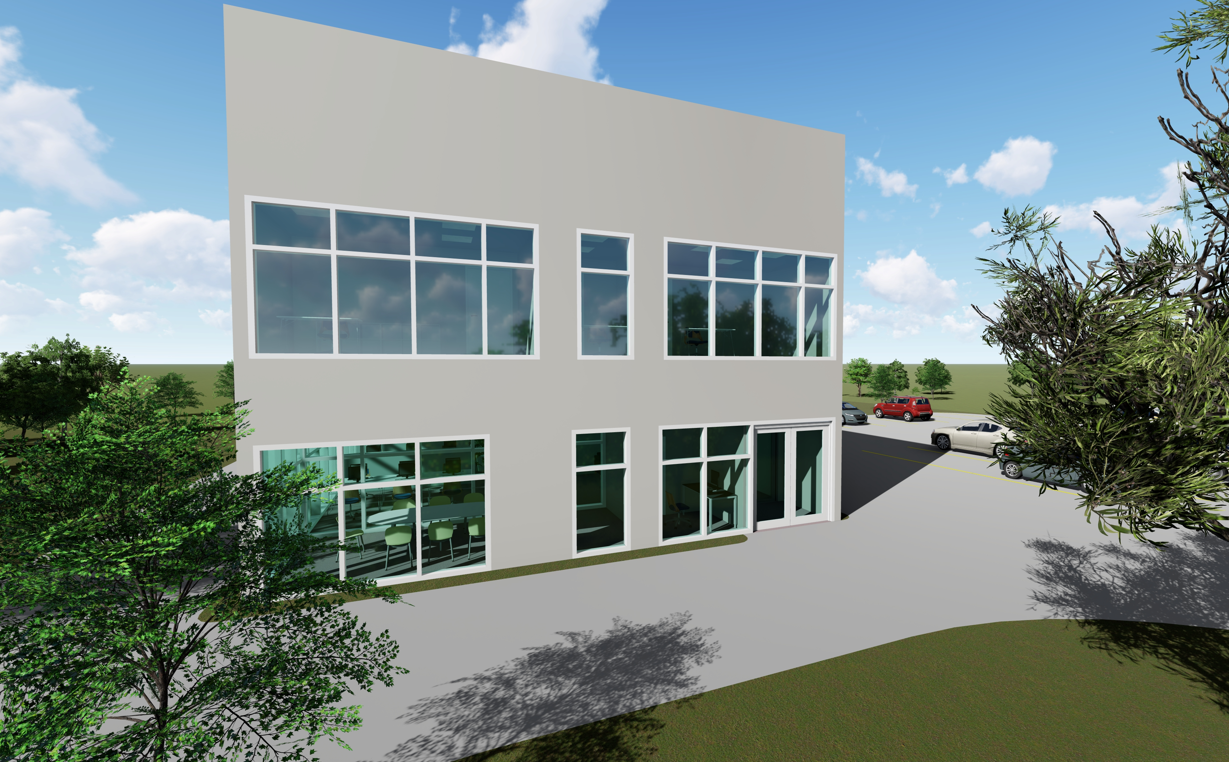
A strong portfolio contains more than attractive renders. Look for coordination presentations that demonstrate how the firm manages clashes and complexity across real projects of a similar scale to yours.
Certifications such as ISO 19650
Certifications like ISO 19650-1:2018, which covers information management using BIM, show a commitment to quality assurance and data security. UK-based providers may also hold accreditations such as BRE Global certification. For a deeper look at the upside, see our overview of the advantages of outsourcing BIM services.
FAQs: outsourcing BIM or keeping it in-house
Is it better to outsource BIM or keep it in-house?
It depends on your workload, budget and existing skills. Outsourcing suits variable or growing pipelines and firms that need specialist expertise quickly, because you pay per project rather than carrying fixed costs. An in-house team suits firms with steady, year-round BIM work who want maximum control and continuity. Many firms use a hybrid of both.
Why outsource BIM services?
Outsourcing gives access to specialist expertise, advanced tools and proven workflows without recruitment, licensing or training lead times, often leading to higher-quality deliverables and cost savings on complex construction projects, while freeing your own staff to focus on design and delivery.
What are the pros and cons of outsourcing BIM?
Pros include cost efficiency, access to specialist skills, and scalability that lets you focus on core tasks. Cons include less day-to-day control, a greater need for structured communication, and reliance on choosing a reputable, secure provider.
What are the main disadvantages of an in-house BIM team?
The main downsides are high fixed costs such as salaries, software licences, hardware and training regardless of workload, slow recruitment in a tight skills market, and idle capacity during quiet periods that erodes the economics.
How much does it cost to outsource BIM in the UK?
Outsourced BIM is typically priced per project or per package rather than as a fixed annual cost, so you only pay for what you use. The exact figure depends on scope, complexity and discipline; see our pricing page for a transparent breakdown.
Can I combine in-house and outsourced BIM?
Yes, a hybrid model is common and often the lowest-risk option. Firms keep a small core team (such as a BIM manager and coordinator) to own standards and quality, and outsource production modelling to scale with demand.
Conclusion
BIM outsourcing or not outsourcing? The honest answer is that it depends on your firm. If your pipeline is steady and BIM is central to your business, an in-house team gives you control and continuity. If your workload is variable, you need to scale quickly, or you want specialist capability without the fixed overhead, outsourcing, or a hybrid of the two, is usually the smarter route. Weigh your utilisation, budget, control needs and the skills you already have, and the right path becomes much clearer.
If you would like to explore the outsourcing route, BIM Outsourcing delivers fully coordinated MEP BIM services and clash detection for UK contractors, with transparent pricing, so you can keep your team focused on what they do best.