
AI for Smarter Construction Planning and Design
January 6, 2025
Written by BIM Outsourcing
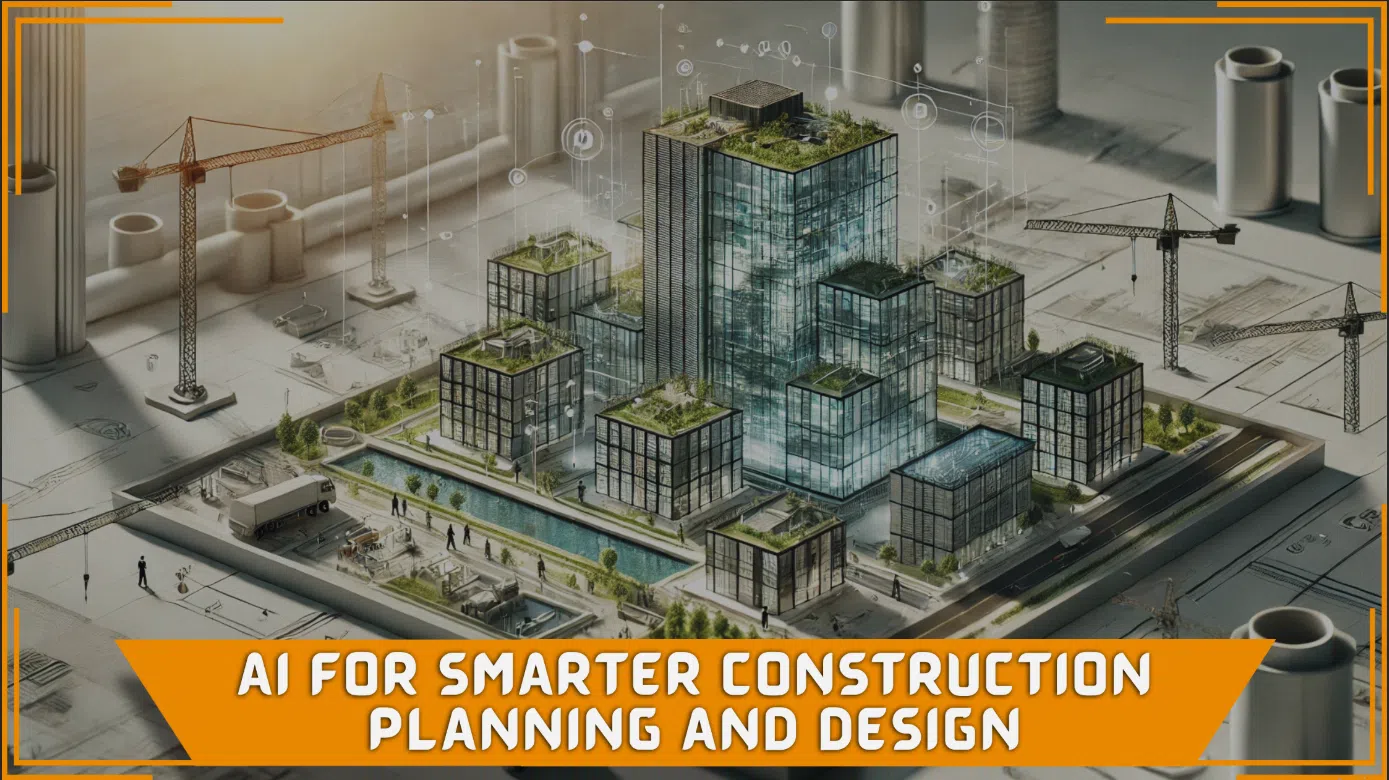
The construction and building services have always been the bloodline of societal development, but at the same time it is also notorious for its delays and rising cost of competition as compared to the costs anticipated in design phase. Artificial Intelligence, once a far-off concept, is now a real-world tool enhancing efficiency, safety, and innovation in construction planning. Artificial intelligence solutions are not just transforming practices – they are revolutionizing how the entire industry operates. In this article, we delve into the role of AI in making construction planning and design smarter, more efficient and sustainable.
Current Challenges in Traditional Construction Planning and Design
Whether construction projects involve residential buildings, commercial properties or infrastructure projects, all of them have their own complexities and require careful planning, coordination and execution. Several challenges emerge in all project stages from concept design to project handover, including;
- Project Delays
Construction schedules and estimated completion times are often disrupted because of unforeseen issues, majors one can be weather conditions, labor shortage or disruption in supply chain. Such project delays often turn into increased costs and frustration for stakeholders. - Cost Overruns
Budget overruns are a common issue in construction. Main causes of these cost overruns are inaccurate estimation, unclear scope, or resource miss management. - Coordination Problems
Construction projects often have multiple stakeholders like consultants, contractors from different disciplines, suppliers and clients. Miscommunication and lack of coordination between among these stakeholders can cause costly mistakes or delays. - Design Flaws
Errors in the initial design or in later phases of the design can result in structural issues, rework, or expensive revisions. Identification of such flaws in design before the on-site begins is crucial for the project success.
AI technologies, including machine learning algorithms, predicting the valuable insights from available data, are proving to be valuable tools to overcome the challenges discussed above. There are endless ways in which AI can contribute to making the construction smarter in planning and design phase.
Generative Design for Optimized Building Layouts
Generative designs using artificial intelligence are one of the most exciting and useful advancements in the construction industry. It allows architects and designers to input multiple project constraints, such as materials, budget, environmental factors and performance goals. It will then generate multiple AI design alternatives to choose from. These designs are later evaluated and refined based on set parameters, helping to create more efficient, cost effective and equally sustainable building layouts.
For example, in middle east, architects and engineers are using AI to optimize the building design to ensure energy efficiency, sustainable design and occupant comfort. They can optimize energy consumption or maximize the use of natural light which leads to economically efficient and environment friendly buildings.
Collaborative Design and Virtual Simulation
AI enhances collaboration and communication across the teams and stakeholders. Although almost all construction projects have information stored in a single centralized location where all project members can work simultaneously. Integrating this collaborative design tool with AI allows real-time data sharing, visualization of project data, virtual assistance and chatbots.
Additionally, AI driven simulation tools allow stakeholders to test and visualize their design to check how they will function in real world scenarios. Virtual reality (VR) and augmented reality (AR) technologies, when combined with AI, allow clients and contractors to experience 3D models of buildings before the start of actual construction which may recommend necessary revisions.
Sustainable Design and Construction
As the government policy and construction industry adapt towards more sustainable practices, AI plays a pivotal role in designing eco-friendly buildings. Al tools are being used to optimize the selection of materials, energy usage and waste reduction. For example, AI algorithms can be used to analyze energy efficiency data, suggest ways to optimize insulation on the ducts and renewable sources. This will ultimately reduce the carbon footprint ratio of the building. Furthermore, long term environmental and weather impact can also be predicted.
While reducing energy consumption and carbon emission, AI helps construction companies to reduce waste by predicting material usage more accurately. By minimizing material waste during construction, companies can significantly reduce their environmental footprint while also lowering costs.
Quality Assurance of the Design
AI tools can aid in maintaining the quality standards of the building or infrastructure design. AI can be used to analyze 3D models as well as data in other formats and issue compliance reports against established codes, regulations and standards. This includes verifying compliance with local building codes, zoning laws, fire safety standards, accessibility regulations and structural integrity guidelines. Design validation through AI is almost automated and does not any manual review. It has the ability to completely ensure that the design adheres to all necessary legal and regulatory requirements.
Efficient Construction Planning
Although planning engineers are already using tools like ChatGPT to populate their planning schedules and ensure the correct work breakdown structure, AI has the potential to accomplish much more than that. They can optimize their schedules, resources, costs and project outcomes.
Cost estimation and budgeting is quite automated through AI powered tools. It analyzes the project blueprints, material list and historical data. Reducing the risk of human error in budgeting, ensuring accurate and realistic financial planning. AI can also track the project costs in real time, alerting the project manager simultaneously and allowing enough time to adjust the gap before the problems are escalated.
AI Powered Building Information Modeling
BIM is already a cornerstone of the modern construction industry, enabling virtual 3-dimensional geometry of buildings and infrastructure. With the integration of AI in BIM, the construction industry has access to even more powerful ones which assist them in simulations, calculation and automate the repetitive tasks. AI enhanced BIM can analyze vast amounts of building data that can highly assist in clash detection and providing enough clearance to the building components where required.
This integration can reduce the project reword during construction and cost while maintaining the quality of the project. BIM has an ability to integrate real time environmental data such as weather patterns, location and local climate condition. BIM model along with real time environmental data can recommend adjustment to the building’s design or materials to enhance sustainability, helping to maintain green building standards.