
Unlocking the Potential of BIM in UK Housebuilding: Opportunities, Challenges, and Solutions
December 6, 2024
Written by BIM Outsourcing
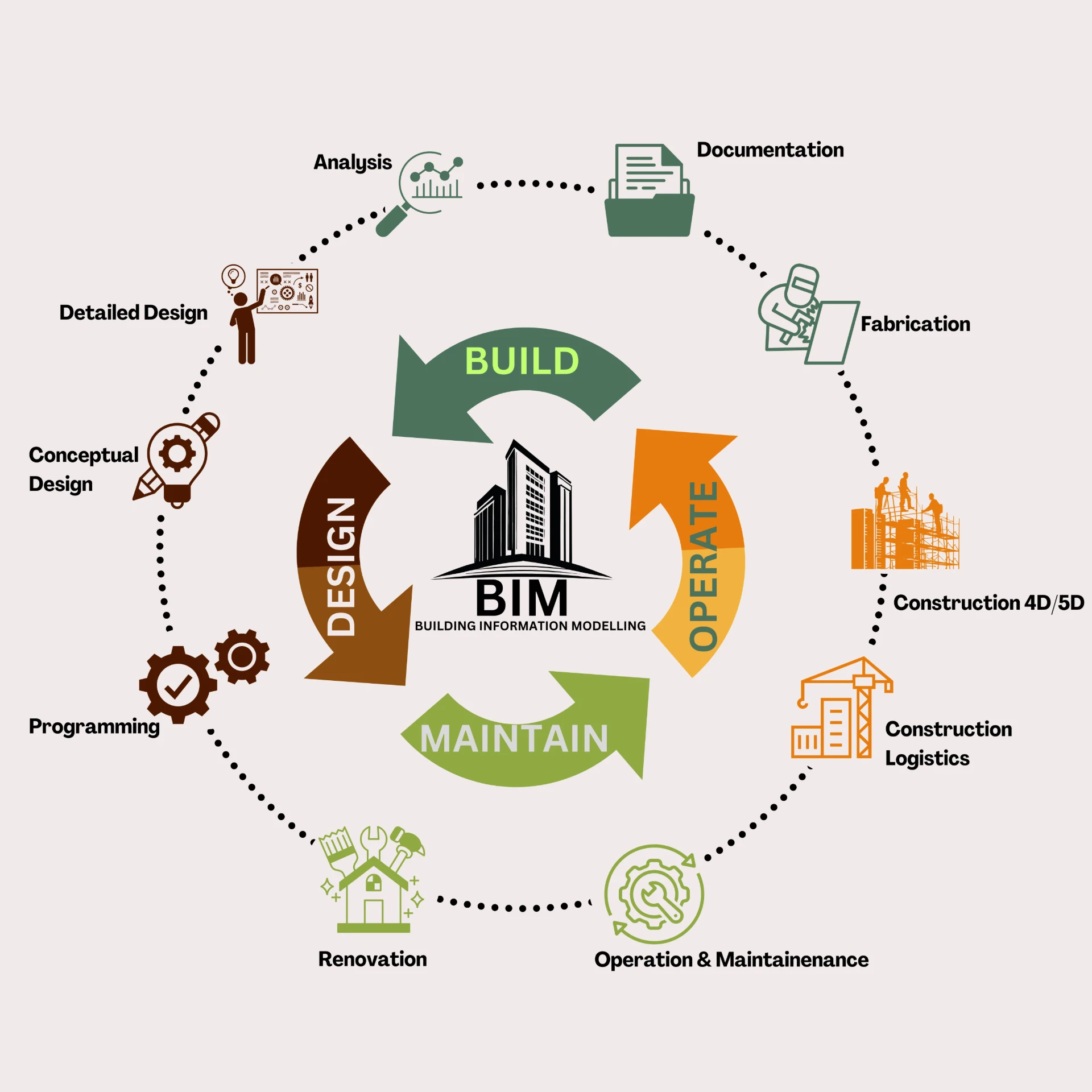
The UK housing market faces a critical challenge: meeting the growing demand for affordable, high-quality homes while grappling with inefficiencies and outdated practices. Building Information Modelling (BIM) offers a beacon of hope, promising greater efficiency, cost reductions, and enhanced collaboration. However, despite its potential, the adoption of BIM in the housebuilding sector has been slow. This blog explores what BIM is, its benefits, barriers to adoption, and strategies for wider integration in the industry.
Understanding BIM: More Than Just 3D Models
At its core, Building Information Modelling (BIM) is an intelligent, 3D model-based process that integrates data and tools for planning, designing, constructing, and managing buildings. It transcends traditional construction practices by fostering collaboration among stakeholders and creating a shared data environment.
How BIM Works
- Centralized Data: All project information, from designs to material specifications, is stored in a shared model.
- Collaboration: Stakeholders—architects, engineers, contractors, and clients—can access and modify the same model.
- Lifecycle Management: BIM extends beyond construction, supporting facility management throughout the building's lifecycle.
Key Benefits of BIM
- Design Accuracy: By identifying clashes and errors during the design phase, BIM minimizes costly reworks.
- Cost and Time Savings: Enhanced planning reduces waste and accelerates project timelines.
- Sustainability: BIM promotes energy-efficient designs and sustainable material use.
- Improved Quality: Homes built with BIM have fewer defects, ensuring higher customer satisfaction.
Opportunities for BIM in the UK Housebuilding Sector
The UK housebuilding industry has much to gain from adopting BIM. Here’s how BIM could reshape the sector:
1. Enhanced Construction Quality
BIM reduces defects and improves overall construction quality by:
- Identifying design clashes before construction begins.
- Providing precise data for on-site teams to follow.
- Enhancing coordination among subcontractors and suppliers.
2. Facilitating Off-Site Construction
Off-site manufacturing and modular construction are becoming increasingly popular as solutions to the UK housing crisis. BIM plays a pivotal role in these methods by:
- Streamlining design and production.
- Managing logistics for modular components.
- Supporting accurate assembly on-site.
3. Efficiency in Project Management
BIM enables better project management through:
- Automated material scheduling and cost estimation.
- Real-time tracking of progress.
- Reducing the number of site visits required for issue resolution.
4. Driving Sustainability
With growing emphasis on sustainability, BIM helps housebuilders:
- Reduce material waste by optimizing designs.
- Plan for energy-efficient homes with better insulation and energy systems.
- Track the carbon footprint of materials used.
5. Marketing and Customer Engagement
BIM enhances the marketing process by:
- Offering potential buyers virtual walkthroughs of properties.
- Providing customization options for clients to visualize.
- Supporting online sales with detailed design information.
Barriers to BIM Adoption in Housebuilding
Despite its advantages, BIM adoption in the UK housebuilding sector remains limited. Several challenges hinder its widespread use:
1. High Initial Costs
The perception that BIM requires significant upfront investment in software, training, and hardware is a major deterrent for smaller firms.
2. Skill Shortages
The lack of skilled professionals capable of utilizing BIM effectively poses a significant challenge. Many firms struggle to find employees with both digital and construction expertise.
3. Resistance to Change
The housebuilding industry, particularly small and medium-sized enterprises (SMEs), is often conservative and reluctant to adopt new practices. Traditional methods are seen as reliable, leading to resistance to digital transformation.
4. Fragmented Supply Chains
The use of multiple subcontractors and suppliers complicates BIM integration. Many subcontractors lack the resources or expertise to adopt BIM.
5. Limited Awareness
Many housebuilders still associate BIM solely with 3D modeling, failing to recognize its broader benefits, such as data management and lifecycle support.
Case Studies: BIM in Action
While adoption has been slow, some success stories demonstrate BIM’s potential in housebuilding:
1. Nottingham City Homes
Nottingham City Homes used BIM for its £5.5 million Meadows project, a 54-home regeneration scheme. By leveraging BIM, the project achieved:
- A 5% cost reduction compared to traditional methods.
- Greater accuracy in material scheduling.
- Reduced on-site errors and delays.
2. Wienerberger’s e4 Brick House
Wienerberger, in collaboration with ARUP, used BIM to design and construct the e4 Brick House. The project highlighted:
- Enhanced collaboration through digital modeling.
- Efficient material use and clash detection during planning.
- Reduced construction time and cost.
Driving BIM Adoption: Recommendations and Strategies
To unlock the full potential of BIM in the UK housebuilding sector, a strategic approach is required. Here’s how industry stakeholders can drive adoption:
1. Raise Awareness and Education
- Tailored Training: Develop BIM-specific training programs for housebuilders and subcontractors.
- Educational Inclusion: Introduce BIM as a core subject in construction and engineering courses.
- Success Stories: Share case studies and real-life examples to illustrate BIM’s benefits.
2. Government Support
- Incentives: Provide financial incentives, such as tax breaks or grants, for adopting BIM.
- Mandates: Enforce the use of BIM Level 2 for private sector projects, as has been done for public sector projects.
3. Foster Collaboration
- Partnerships: Encourage collaborations between large contractors and SMEs to share knowledge and resources.
- Standardization: Develop standard BIM libraries and protocols to simplify implementation across projects.
4. Leverage Technology
- Invest in user-friendly BIM software to reduce the learning curve.
- Promote cloud-based platforms for real-time collaboration and data sharing.
5. Focus on Long-Term Gains
Educate stakeholders on the long-term benefits of BIM, such as reduced maintenance costs and improved resale value of properties.
The Future of BIM in UK Housebuilding
The road to widespread BIM adoption in the UK housebuilding industry is fraught with challenges, but the potential rewards far outweigh the effort required. By embracing BIM, housebuilders can:
- Deliver higher quality homes faster and at a lower cost.
- Enhance their competitive edge in an increasingly digital marketplace.
- Contribute to a more sustainable and efficient construction industry.
Final Thoughts
The UK housebuilding industry stands at a pivotal moment. With BIM, the sector can overcome longstanding inefficiencies and deliver on the promise of affordable, high-quality housing. The question is no longer if BIM will transform housebuilding but when.
Are you ready to embrace the future of construction? Contact us to explore how BIM can transform your projects and elevate your business.