
How do BIM Dimensions elevate a construction project?
February 7, 2025
Written by BIM Outsourcing
Introduction
Challenges and complexities within a project are the elements that make the construction industry a technical and challenging field. However, these barriers have become easier to tackle by implementing BIM technology throughout the entire process. This revolutionary technique involves creating a 3D digital model that provides far more information than just the geometric aspects. It offers detailed information about the project execution and management across every stage, including the estimated cost, time schedules, and necessary materials for its construction, as well as the maintenance facilities required to keep the asset operational throughout its long lifecycle, even after completion.
For efficient implementation of this technique, it is essential to understand the comprehensive concept of BIM dimensions, which are a key aspect of BIM. In this blog, we will thoroughly review how BIM dimensions elevate a construction project, ensuring cost-effectiveness, efficiency, sustainability, and the overall outcome of the project.
Understanding BIM Dimensions and their Outcomes
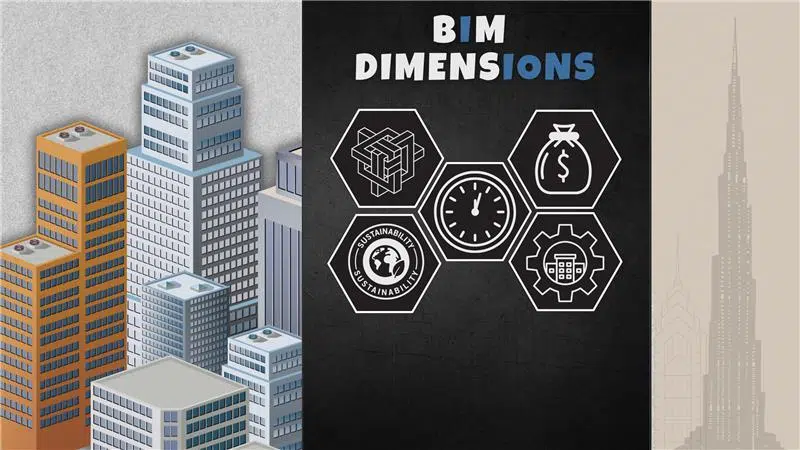
BIM dimensions refer to layers of information organized to represent specific aspects involved in a construction procedure, embedded within a BIM model to enhance team collaboration, visualization, and management. Key BIM dimensions are as follows:
3D BIM (Geometry)
BIM 3D typically includes the 3D model of the building, which enables stakeholders to visualize the building’s geometric aspects and functionality in real time instead of relying on traditional 2D drawings. It helps analyse clashes before on-site execution, ensuring efficiency, improving collaboration, and preventing miscommunication throughout the project.
3D BIM Outcomes
- Better Visualization
It allows stakeholders to view the final output—the building—ahead of time for better decision-making and understanding of the project.
- Clash Detection
BIM 3D makes the identification of clashes easier by providing a 3D model, which enables designers to make decisions to remove potential issues, preventing project delays and costly reworks in advance instead of addressing them on-site.
- Efficient Design
With the help of BIM 3D, designers can ensure the completion of an efficient design phase in terms of both functionality and aesthetics before the execution process begins.
4D BIM (Time)
BIM 4D involves linking the 3D model with the schedule to enhance visualization, enabling stakeholders to observe the building’s construction step by step while understanding each activity in the construction process.
4D BIM Outcomes
- Visualization of project stages
4D BIM, after integrating the 3D model with the project schedule, helps teams keep a close eye on each activity, coordinating the efficient use of labour and resources, avoiding workflow conflicts and project delays, and increasing the overall efficiency of the execution phase.
- Delays Identification
Using 4D BIM to simulate each activity involved in the construction phase helps teams spot project delays, such as task overlapping and resource or labour allocation issues, ahead of their execution in real-time.
- Efficient Planning
Streamlining the timelines of all activities enables teams to allocate resources, such as machinery, labour, or materials, wisely, minimizing asset wastage and maximizing overall project efficiency.
5D BIM (Cost)
5D BIM enables stakeholders to monitor the project budget and cost at every stage and fosters efficient outcomes throughout the project by managing expenses and generating accurate estimated cost schedules.
5D BIM Outcomes
- Precise Budget Prediction
By utilizing 5D BIM, enterprises or companies can generate accurate bills of quantities and estimate costs based on the required materials, resources, and labour. This method reduces material waste, promotes efficient resource allocation, and increases the overall efficiency of the project.
- Expense Monitoring
BIM 5D is helpful in tracking expense changes that occur when material or design adjustments are made, avoiding surprises and keeping stakeholders notified about the changes by updating the 3D model immediately.
6D BIM (Sustainability)
6D BIM promotes sustainability by designing and constructing a building in compliance with sustainable building standards and using sustainable materials that optimize energy consumption and reduce environmental impact.
6D BIM Outcomes
- Energy consumption analysis
6D BIM provides stakeholders with a digital environment to run simulations and generate evaluated data for energy consumption, which helps design optimized and smarter buildings with low energy usage that aids in reducing costs and environmental consequences.
- Achieving green certifications with sustainable materials
6D BIM helps teams monitor energy efficiency and the use of sustainable materials and their environmental impact, ensuring the building remains compliant with standards essential for earning certifications such as LEED (Leadership in Energy and Environmental Design).
7D BIM (Facility Management)
7D BIM ensures the maintenance and management of systems like HVAC, plumbing, and electrical systems within a building to track building performance, which is essential for ensuring the building’s safety through daily routine inspections by facility managers. It helps increase the lifecycle and sustainability of an asset even after the building is constructed.
7D BIM Outcomes
- Facility Management
7D BIM makes it easier to monitor and maintain complex systems within a building, keeping the building equipment serviced and up to date, which increases operational performance and optimizes energy consumption.
- Improving efficiency
Having all information related to maintenance and operation in one place, it’s easier to manage the building efficiently, reducing unnecessary pauses and ensuring smooth performance.
Conclusion
BIM dimensions play a pivotal role in leveling up the construction industry. Every dimension has its specific area of scope, like 3D, which serves to provide a detailed model to ensure the project meets the stakeholders’ expectations. Then, moving to 4D, which is essential because of the time management factor in the construction industry, by adding a timeline to the model, keeping the stakeholders monitoring the project deadlines, preventing delays, and improving workflow. 5D, afterward, adds the cost factor to the model, enabling the stakeholders to stay within a feasible budget and allocate resources wisely, which is crucial for achieving high-quality outcomes. At the same time, 6D plays its role in keeping the buildings compliant with standards to achieve sustainability and to optimize energy usage. Finally, after the construction ends, 7D helps facility managers maintain the operational performance of the building throughout its lifecycle by keeping the systems up to date for efficiency and reducing downtimes. Incorporating these dimensions and having a detailed digital record of all aspects empowers the teams for better collaboration and visualization, elevating the construction industry with the help of modern practices.