
Data-Driven Decisions: AI and BIM in Construction Analytics
January 6, 2025
Written by BIM Outsourcing
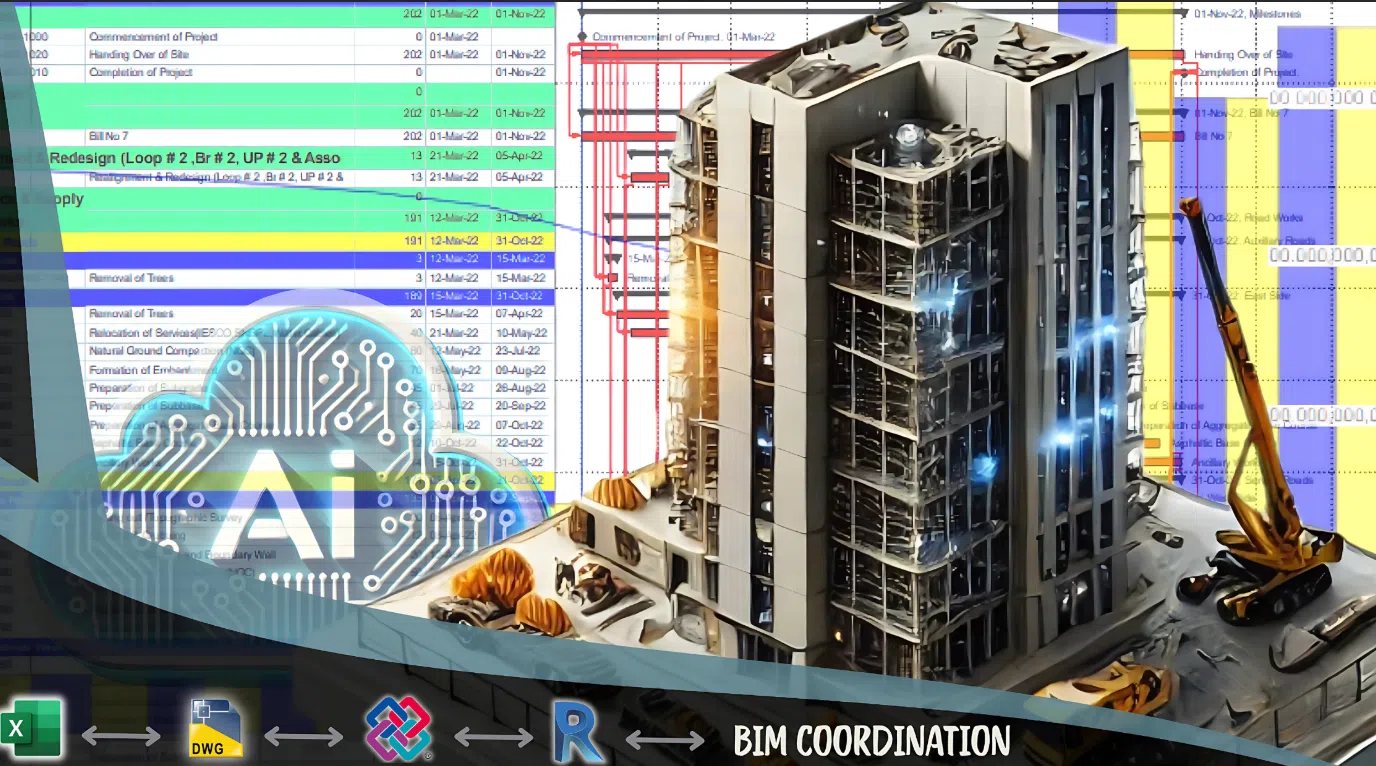
Just like every other industry, the construction industry is also undergoing a digital transformation with the advent of innovative technologies like artificial intelligence, Internet of Things, Block chain and cloud computing. Transformation is construction driven by increasing availability in data and rise of building information modeling (BIM). All these technologies are revolutionizing how projects are planned, executed, managed, enabling data-driven decisions at every stage. By leveraging this data-driven analytics, construction professionals can minimize the risks, optimize resources and streamline the project workflow.
The Role of Data in Modern Construction
Design and planning of modern construction projects generate tons of data from various sources, including architectural design, engineering calculations, project quantities, finances and internet of things devices. Generating and managing that vast amount of data can be overwhelming but it can be an asset for decision making when managed effectively. In modern construction, industry is transitioning towards data driven practices where decisions are guided by real time insights from the simulations and predictive analytics dashboards. Data for modern construction can be obtained in excel format, dwg and pdf drawings and BIM model in IFC or RVT format. This data can be analyzed and viewed in the form of graphs and dashboards using tools like excel, Power BI or Tableau. These dashboards can be later used to make decisions on this real-time data.
BIM: A Foundation for Data-Rich Construction
Building information modelling is simply a digital representation of the physical and functional characteristics of any built asset building or infrastructure. It’s much more than traditional 2D and 3D models that provide drawings for architectural, structural, and engineering information. BIM has a lot more information than drawings, like specification of components, calculations, quantity surveying data, simulation and sustainability data. All this information produced using BIM workflow produces a vast amount of data that needs to be converted to useful information. But BIM remains the source of data stored in centralized location while enabling access for users based on their designated permissions.
BIM workflow involvement in construction starts from the concept design stage and goes all the way up to demolition phase. Data produced needs to be processed to get actionable insights to make decisions, that where artificial intelligence comes to play to do analysis and interpretations on basis of available data.
Quality of data produced is the main factor behind the success of AI enabled workflow. Efficient decisions can only be ensured if the data we are working on is reliable and up to date as outputs will only be as good as the inputs we provide. So, BIM data being developed must be updated in real-time and carefully produced.
Key aspects where BIM assist in data driven decisions include:
- 4D Construction Schedules
3D model integrated with time data is known as the 4D construction schedule, this allows for the visualization and simulation of the construction process. These visualizations and simulation help to track the progress of completed construction and identify potential clashes. These visuals allow us to make that data driven decision available in real time. - 5D Cost Estimation
Integrating that same BIM model with cost data results in 5D cost estimation enables quick and accurate cost estimation of the project. This helps in identifying cost overruns early on and allows for proactive adjustment to the project costing plan. Sometime graphs and dashboards are the best way to view required information to make decisions. - Coordination
Ensuring the fully coordinated BIM model is the key requirement to ensure the successful construction process. BIM provides the tools to detect clashes and maintain required clearance for the components to make room for fittings and maintenance. BIM is very helpful in spotting collision between components of BIM model/s either for a same disciple or outside the discipline. The only limitation with BIM tools is that they take the false clashes into consideration and duplicate the single clash multiple times. This problem can be mitigated with the help of AI algorithms and automation. - Risk Management
Potential risks can be identified and mitigated proactively before the commencement of on-site construction by analyzing the fully coordinated BIM model. This identification includes potential environment, health and safety hazards, assessing the impact of weather events as well as the environmental impact on the site.
AI: Transforming Data into Insights
BIM and AI when combined, create a powerful synergy to ensure data-driven decision making. Artificial Intelligence has the ability to process and analyze the vast amounts of data generated by BIM models. This analysis using AI’s Finite Element Analysis (FEA) and Machine learning algorithm provide valuable insights and predictions to make safe and efficient decisions. AI can give the provide any specified information in matter of seconds and doesn’t require to scroll through hundreds of drawings or counting the number manually in model. For example, AI can easily provide the number of power outlets a standard recommends installed in particular space in couple of minutes.
As a use case example, AI can help in taking quality and environmental decisions to optimize climate quality like indoor lighting and air conditioning. Reinforcement machine learning algorithms can be utilized to improve health and safety, humidity, air quality with effective environment safety and cost.
Some of the key applications of AI in construction analytics include:
- Predictive Analytics
AI algorithms can help in decisions related to project timeline schedules, costing and compliance. It harnesses a proactive approach in management and decision making by analyzing the current and historical project data. - Construction Site Monitoring and Management
Computer vision systems with AI integration can be deployed on construction sites on site to ensure the safe environment and make decisions on the bases of insight produced from site cameras and sensors. These computer vision cameras can monitor progress on the site, identify safety hazards, and track the moving objects and workers. - Quality Assurance
AI has the potential to analyze images & videos to detect defects and anomalies in construction. These defects include cracks, leaks and deviation from the design specifications. Images and video are taken by the CCTV cameras installed on the site and they fulfill multiple purposes. - Manpower and material optimization
AI algorithms can assist in making decision related resource allocation, such as material, equipment, and labor based on prediction provided by the AI and ML algorithms. It minimizes waste and reduces costs while ensuring efficiency.