
Building Information Modelling (BIM): The Essential Guide For Newcomers
January 6, 2025
Written by BIM Outsourcing
In the modern era, where construction is evolving rapidly and touching the apex of the sky, Building Information Modelling (BIM) stands out as the one and only solution to all problems encountered by field experts. Building Information Modelling (BIM) is not just a technology but a chain that seamlessly integrates design, construction, and management phases. Within BIM, it embodies a collaborative framework that empowers stakeholders to make better decisions ahead of time based on a 3D model executed with real-time data.
This blog explores the concept of BIM’s importance in the Architecture, Engineering and Construction (AEC) industry. Let’s understand how BIM is playing an impactful role in shaping the construction industry.
The Evolution of Building Information Modelling (BIM)
The evolution of BIM started in the 20th century when architectural practices were revolutionised with the help of computer-aided design (CAD). BIM, unlike conventional 2D CAD drawings, introduced the concept of creating a 3D model with data that could be used throughout the project.
Benchmarks in BIM Evolution
- 1980s: The concept of parametric modelling emerged in the early 80s, where changes in one parameter affect the parameters of the interconnected elements.
- 1990s: The formal introduction of BIM took place in the 90s, a transition from 2D to 3D that provided architects and engineers with the opportunity to work with more than just 2D drawings, using sophisticated systems. With the help of BIM, the integration of data and visual aspects for better planning and construction became possible.
- 2000s: Autodesk Revit, an important software in the BIM industry, was launched in the 2000s. This software allowed architects and engineers to integrate different disciplines of a building, such as Structural, Architectural and MEP (Mechanical, Electrical, and Plumbing), within a single 3D model, reducing errors, improving accuracy and facilitating better collaboration across design and construction. This gave BIM worldwide attention within the AEC industry.
- 2010s to Present:Since the 2010s, BIM (Building Information Modelling) has been rapidly adopted in the construction processes globally because it makes the process smoother, from design to construction, and improves teamwork.
Definition of BIM
Building Information Modelling (BIM) is often thought of as merely a 3D design tool, but it is more than that. In essence, BIM is a digital model that represents both the functional (how the building works) and the physical (how the building looks) features of a building. This model helps in maintaining facilities even after the building is constructed in real life. In short, BIM helps in better planning, from design to demolition of a building, and improves collaboration and optimization.
Key Outcomes of BIM
- Boosted Collaboration
With the help of BIM, it has become easier to share data or digital models among architects, engineers, and clients in real-time, boosting collaboration and avoiding confusion.
- Improved Accuracy
Before bringing the construction process on-site, BIM ensures that clashes are addressed in compliance with real-time standards, resulting in a smooth workflow, reducing errors and avoiding costly delays and expenses such as a pipe or duct passing through a beam or wall.
- Cost Optimization
BIM creates a detailed 3D model, which provides an accurate list of materials and other components, such as steel, along with precise dimensions to be used in carrying out construction processes. It enables contractors to order the exact amount needed instead of over-purchasing or under-purchasing, reducing wastage of resources and achieving cost-efficient construction.
- Time Savings
Time management is crucial for better workflow on-site. BIM provides streamlined scheduling, improving execution without downtime or unnecessary pauses or delays. It saves time and maintains the sequence of each activity through better coordination and planning.
- Sustainability
BIM plays an effective role in construction sustainability by designing and analysing building energy consumption through simulations and data learning algorithms. It predicts the entire performance lifespan of a building and provides a plan for efficient demolition and the use of recycled materials for future projects.
Obstacles in adopting BIM
To fully utilize BIM, everyone must tackle the obstacles that come in adopting it. Let’s discuss some common barriers in BIM adoption:
- High initial cost
For the implementation of BIM, organizations must have BIM software, which requires high initial expenditures for the hardware needed to run that software. In addition, employee training sessions are crucial for proper BIM implementation, which can be a challenge for small enterprises with limited resources.
- Skill gaps
Having proper knowledge and skills in BIM is an important step in its implementation. This serves as a stepping stone for industries lacking trained professionals, making it difficult to adopt the BIM workflow.
Importance of BIM in the AEC industry
BIM (Building Information Modelling) helps the AEC (Architecture, Engineering, and Construction) industry solve many significant issues that might arise during construction, such as time schedules and budget constraints. It helps reduce waste, save time, improve collaboration between architects, engineers, and clients, and reduce a building’s environmental impact.
Widely used BIM tools
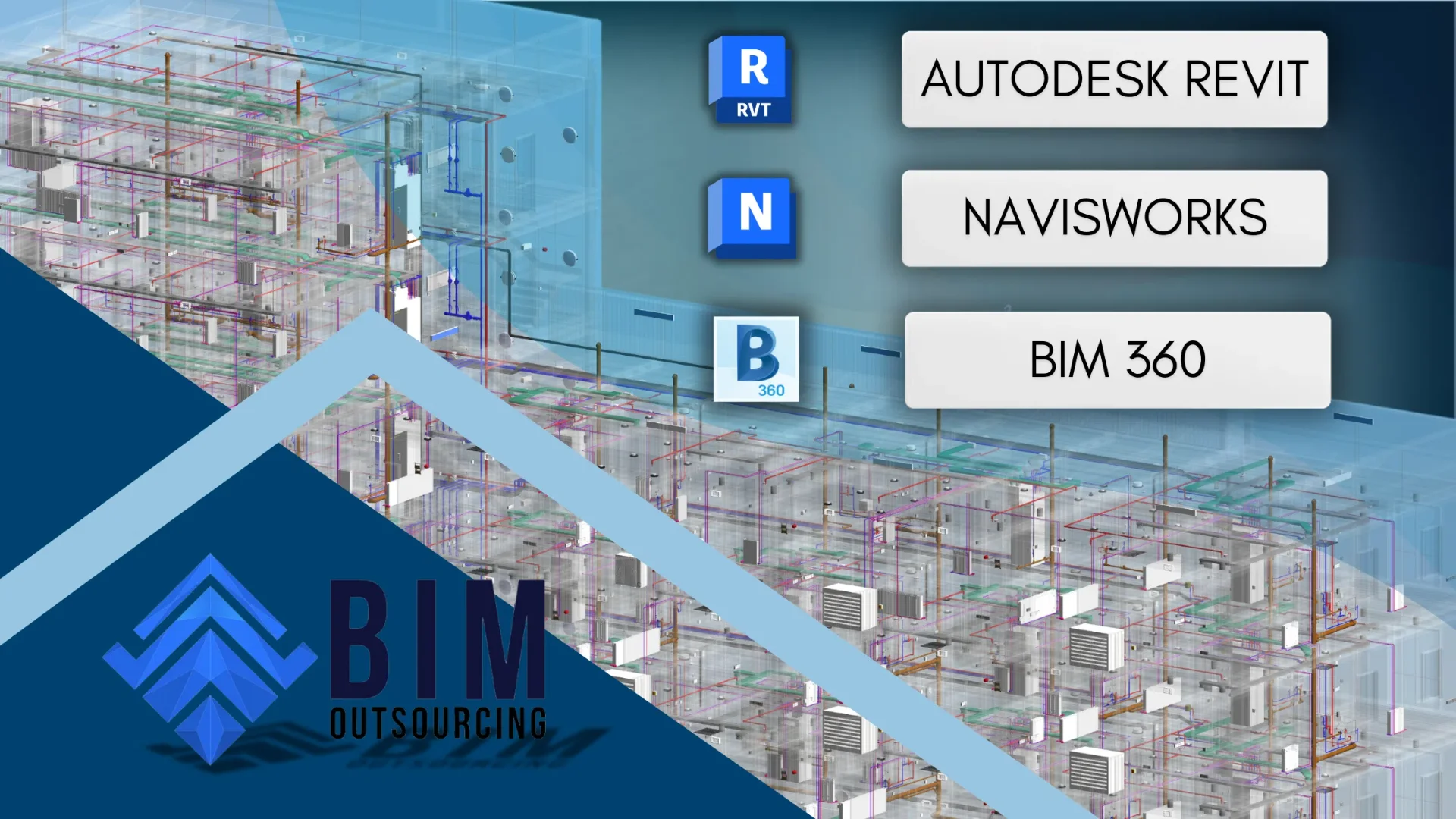
- Autodesk Revit: Used for modelling different disciplines such as architecture, structure, and MEP (Mechanical, Electrical, and Plumbing).
- BIM 360: A cloud-based platform used for better collaboration and project management by sharing real-time insights with stakeholders.
- Navisworks: A powerful BIM tool used for clash detection and improved 3D visualization.
Conclusion
BIM (Building Information Modelling) is evolving the AEC (Architecture, Engineering, and Construction) industry by integrating every aspect of construction into a 3D model that fosters seamless collaboration in a smarter and more efficient way. It enables stakeholders to make better decisions based on real-time insights for improved project outcomes, avoiding confusion and costly reworks. Without a doubt, adopting BIM in the future, despite its challenges, will not only evolve the industry but also build a sustainable future in construction.