
Best Practices for Implementing BIM in Data Centre Design
March 28, 2025
Written by BIM Outsourcing
Introduction
Building Information Modelling (BIM) has revolutionized data centre design, offering a modern, digital approach to optimize efficiency, sustainability, and cost-effectiveness. BIM enables early clash detection, ensuring smoother project execution and long-term sustainability.
This blog delves into the adoption of best practices for implementing BIM in data centre design, to ensure coordination, streamline the workflow, and reduce costs for an optimised and energy-efficient data centre.
Define project objectives and scope of work
Before putting BIM practices into action in data centre design, stakeholders must define the project objectives and scope of work to achieve them without confusion or delays. Primary aspects include:
- Resource Planning
Resource planning is a crucial aspect of designing a data centre, ensuring power is allocated to all the IT equipment with the necessary cooling to prevent overheating, which could lead to system failure, while efficiently planning for system reliability. Building Information Modelling (BIM) enables resource planning by creating accurate 3D models and simulations to visualise power distribution, cooling requirements, and spatial constraints, ensuring an efficient and optimised setup.
- Compliance with Standards
Compliance with regulatory standards is essential for the sustainability of data centres over the long term. These standards, such as Uptime Institute’s Tier, ASHRAE, and other local building codes, ensure safety and help data centres meet industry demands. BIM simplifies compliance by integrating design specifications with regulations, allowing real-time verification and early detection of deviations before construction.
- Sustainability Goals
To ensure the data centre performs well in the long term, stakeholders must implement energy-saving techniques, such as ensuring good ventilation during the design phase and making the best possible use of natural light to reduce the need for artificial lighting and HVAC systems. This further helps cut costs and reduce the carbon footprint. BIM facilitates sustainability objectives through the potential to perform energy analysis, lifecycle costing, and environmental impact analysis, hence, designers can design layouts to be energy-efficient and choose sustainable materials prior to construction.
- Managing Budget and Time Constraints
The project outcomes depend on two important parameters: budget and time. Managing these two is crucial for efficient execution on-site. In the case of data centres, proper scheduling is required to determine which activities will be carried out first, such as the installation of cooling units and power systems, to prevent delays and meet the project deadline. Similarly, budget management involves controlling the costs of construction materials and data centre equipment, such as cooling systems and hardware, to ensure the project stays within budget. BIM is a useful tool in managing time and budget constraints in terms of accurate cost estimation, automatic quantity take-offs, and 4D scheduling that integrates the building schedule with the model to see progress in the project and foresee any delays.
Draft a well-defined BIM Execution Plan (BEP)
A BEP is a record that highlights the responsibilities of stakeholders, data exchange formats, required software, and compliance with regulatory standards. Key elements of a BEP are:
- Roles of stakeholders
A BEP defines the roles of stakeholders such as architect's role, which is to design a building layout while maintaining aesthetics; the structural engineer, who ensures the structural stability of the building; and the MEP engineers, who are responsible for the efficient installation of mechanical systems and electrical fixtures within the building. Lastly, the project manager is responsible for overseeing the entire process to ensure the project meets deadlines while staying within budget.
- Required Software
A BEP provides information about the software that will be used for implementing BIM, such as Autodesk Revit, Navisworks, and BIM 360, while ensuring compatibility.
- Data Exchange Formats
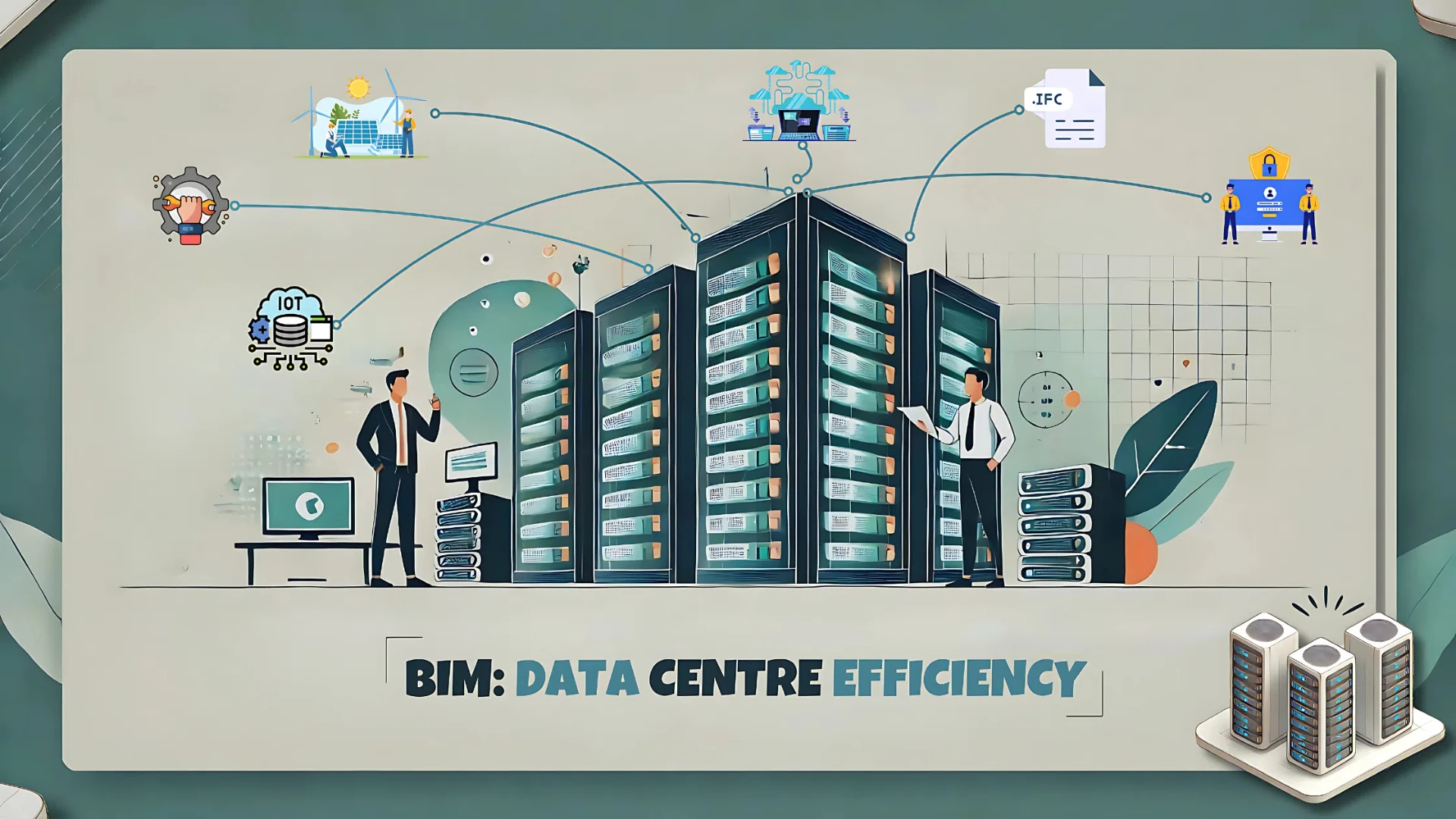
Industry Foundation Classes (IFC) is one of the best formats for data exchange among stakeholders and BIM software. It ensures compatibility and accuracy in project data.
Leverage Integrated BIM Workflows for Seamless Collaboration
MEP (Mechanical, Electrical, and Plumbing) systems in data centres are complex structures that require precise coordination to ensure operational performance and reduce downtime. In this regard, BIM is very helpful because stakeholders can visualize the building and identify clashes through real-time collaboration, making the project cost-effective. BIM workflows enhance project outcomes by:
- Automated Clash Identification
Leveraging BIM-based software such as Navisworks for automated clash identification between complex systems like MEP and structural elements. This tool automatically highlights clashes by analysing the 3D model, including overlaps between elements, and reduces the need for manual checking by designers. Resolving these clashes before on-site execution can help prevent delays, reduce costly rework, and enhance project workflows, increasing the overall efficiency of a data centre.
- Cloud-Based Collaboration
Cloud-based collaboration is very helpful when team members working on a project belong to different countries because everyone can operate remotely with just an internet connection and can access the latest project data rather than working on outdated data, which can lead to miscommunication and project delays. Changes made within the model are instantly updated and visible to the rest of the team members. Autodesk BIM 360 is a cloud-based BIM software that fosters seamless collaboration among stakeholders.
- Common Data Environment (CDE)
A cloud-based platform where stakeholders can share project-related information, such as drawings, 3D models, and documentation reports, ensuring everyone has access to the latest information while avoiding miscommunication and errors, such as using fragmented or outdated information. It acts as a centralized platform for better collaboration between architects and engineers in BIM workflows throughout a project’s lifecycle, from design to maintenance, and includes tools like BIM 360.
Improved Space Planning and Utilization
Space utilization is one of the most crucial aspects of designing a data centre because it makes routine maintenance easier and enhances its productivity. BIM helps in:
- 3D Simulation and Visualisation
With the help of BIM, engineers can better plan their work virtually without even bringing the data centre into construction. In simulations, they can consider multiple layout plans for efficient utilization of space and for finding the best spot for equipment placement, such as server racks and power systems. It also aids in simulating airflow to make the best possible use of cooling systems to prevent overheating, which can cause damage to the system, and energy loss, which can affect data centre efficiency. Addressing these issues digitally rather than during construction can save time and cost while increasing overall project efficiency.
- Cable and Conduit Routing
To ensure easy maintenance and reduce downtime, cable and conduit management is one of the essential practices that should be carried out. Cables, such as power and data cables, which keep the data centre operational, can be managed by routing them through cable trays and conduits to prevent interference with each other. Such interference can cause potential damage, leading to system failure or a power shutdown. With the help of BIM, stakeholders can plan the routing of these cable trays and conduits well, creating detailed 3D replicas using tools like Revit and Navisworks, removing clashes while utilizing space efficiently and visualising the final output ahead of execution.
Ensure Data Privacy and Robust Cybersecurity Measures
Cybersecurity is essential to ensure sensitive data doesn’t fall into the wrong hands, which can lead to serious consequences. BIM models of data centres contain important spatial and layout information, unauthorized changes to which can severely affect the operational performance after its execution on-site. The best measures to be implemented for cybersecurity in BIM include:
- Encrypted Cloud-Based Storage Solutions
Data centres being modelled using cloud-based BIM technology and platforms such as BIM 360 store sensitive data online, which, due to internet connectivity, increase the chances of potential breaches and unauthorized access by personnel to information, leading to data loss and modifications. To ensure robust security, stakeholders must use encryption techniques to keep the information confidential, reliable, and safe from cyberattacks.
- Role-Based Access Control (RBAC)
As the term RBAC clearly reflects, it is something related to roles. Role-based access control is a proactive approach that provides access based on stakeholders' roles in a project. For instance, an architect can access the files and make changes he is authorized to make. On the other hand, a contractor has his own access and restrictions, such as only being able to view the files and make changes to limited elements. This ensures proper security, transparency, and privacy of sensitive data, preventing unauthorized access, breaches, and cyberattacks.
Improve Energy Efficiency Utilizing BIM Simulations
In modern data centres, sustainability and energy efficiency are two crucial factors that ensure the optimal operational performance of the systems throughout their lifecycle. BIM-based simulations support:
- Power Usage Effectiveness (PUE) Assessments
Power Usage Effectiveness (PUE) measures the power efficiency of a data centre. It is calculated by taking the total amount of power used by the entire data centre and dividing it by the power used by IT equipment like servers and storage. The target is to obtain a lower PUE, i.e., less wastage of energy. Data centres enhance PUE by making use of energy-efficient cooling, power-efficient hardware, and solar power. BIM (Building Information Modelling) helps by modelling 3D structures to simulate different energy-conserving methods before applying them in reality. Enhancing PUE helps data centres save money, use less electricity, and become greener.
- Cooling Load and HVAC Simulations
Paying close attention to the HVAC (Heating, Ventilation, and Air Conditioning) systems is essential because it helps keep the data centre and its equipment cool and prevents overheating, which can have serious consequences if not controlled. Stakeholders, with the help of different 3D modelling tools and simulations, incorporate BIM, create a detailed 3D model of the HVAC system and then integrate it with real-time data, creating a simulation that shows how the data centre will respond to heat and how the airflow will be managed to keep the server and power systems cool. This entire process helps them save costs and energy while improving the efficiency of the data centre.
- Renewable Energy Integration
With the help of BIM, stakeholders incorporate renewable energy technologies, such as the installation of solar panels and turbines, to reduce conventional electricity costs and test the energy systems of data centres in different scenarios through a 3D model. They also create detailed reports on energy generation to reduce costs, improve the data centre's efficiency, and make it more sustainable.
Enhance Facility Management with Digital Twins and BIM
BIM aids in the operations and maintenance phase of a building beyond construction with the help of digital twins. These digital replicas allow:
- Real-Time Tracking of Equipment Operational Performance
BIM incorporates digital twins to track facility management and the operational performance of systems such as HVAC and server systems, making them more efficient, reducing downtime, and increasing their lifecycle. It uses a predictive maintenance approach to identify potential issues early and prevent system failures, thereby increasing the overall efficiency of a data centre by reducing costs and making it more reliable.
- IoT-Based Facility Management
IoT (Internet of Things) assists in building management through the utilization of intelligent sensors to monitor and manage various systems. In data centres, the sensors monitor temperature, power consumption, and equipment condition. When something is amiss, such as overheating, the system alerts so that it can be repaired in time. When integrated with BIM (Building Information Modelling), it provides a virtual representation of the building, assisting in energy saving, cost reduction, and smooth operation of everything.
Conclusion
After thoroughly reviewing, the conclusion is that implementing BIM in data centre design improves its efficiency by enabling stakeholders with the opportunity to plan better for improved space utilization, facility management, and optimized energy analysis with the help of simulations. This proactive strategy not only minimizes the risk of construction errors but also promotes long-term sustainability through improved decision-making regarding energy consumption, material use, and system operation overall. With increasing data demands, BIM will remain an important facilitator in the future development of data centre infrastructure, ensuring greater security, scalability, and resilience against future problems.